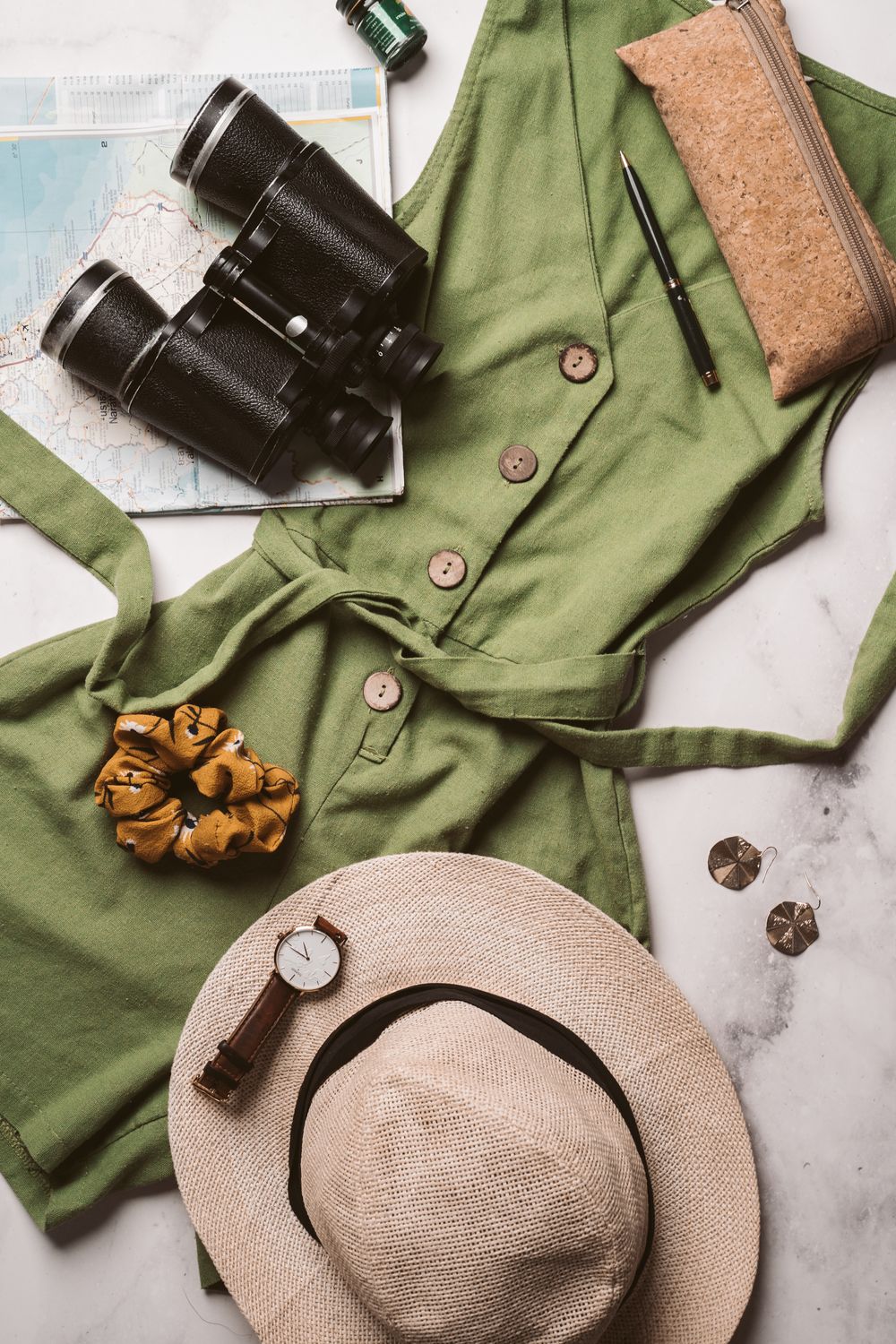
Neutral colours (khaki, olive, tan, grey) work best for game drives - they show less dust and don't stand out against the bush the way bright colours or pure white can. Avoid dark blue and black in tsetse fly areas (parts of Tsavo, Amboseli and the Mara conservancies), as tsetse flies are drawn to dark colours. Layers matter more than people expect: early morning game drives can be genuinely cold, even though the afternoon will be warm.
Comfortable closed shoes for game drives and walking around camp; you generally won't need heavy hiking boots unless your itinerary includes an actual trek like Mount Kenya or Kilimanjaro, which have their own separate gear list.
A wide-brimmed hat, sunglasses, high-SPF sunscreen and a good insect repellent (for evenings) are all worth packing. Most safari destinations in Kenya are malaria risk areas, so speak to your doctor about antimalarial medication before you travel.
If wildlife photography matters to you, bring the longest lens you reasonably can - 200mm is workable, 400mm+ opens up far more options for frame-filling shots. A pair of binoculars per person, not per vehicle, makes a real difference to how much you personally see rather than relying on your guide to point things out.
Passport with at least 6 months' validity, any required visa (check current Kenya eTA/visa requirements for your nationality before you travel), travel insurance details, and some US dollars or Kenyan shillings in cash for tips and small purchases - not every camp or lodge in remote areas has reliable card payment.
A headlamp or torch for camps without full-time electricity, a basic personal first-aid kit, spare camera batteries and memory cards (charging opportunities can be limited), and a dry bag or ziplock bags to protect electronics from dust.
Send us your dates and we'll put together an itinerary and quote based on what you've just read.